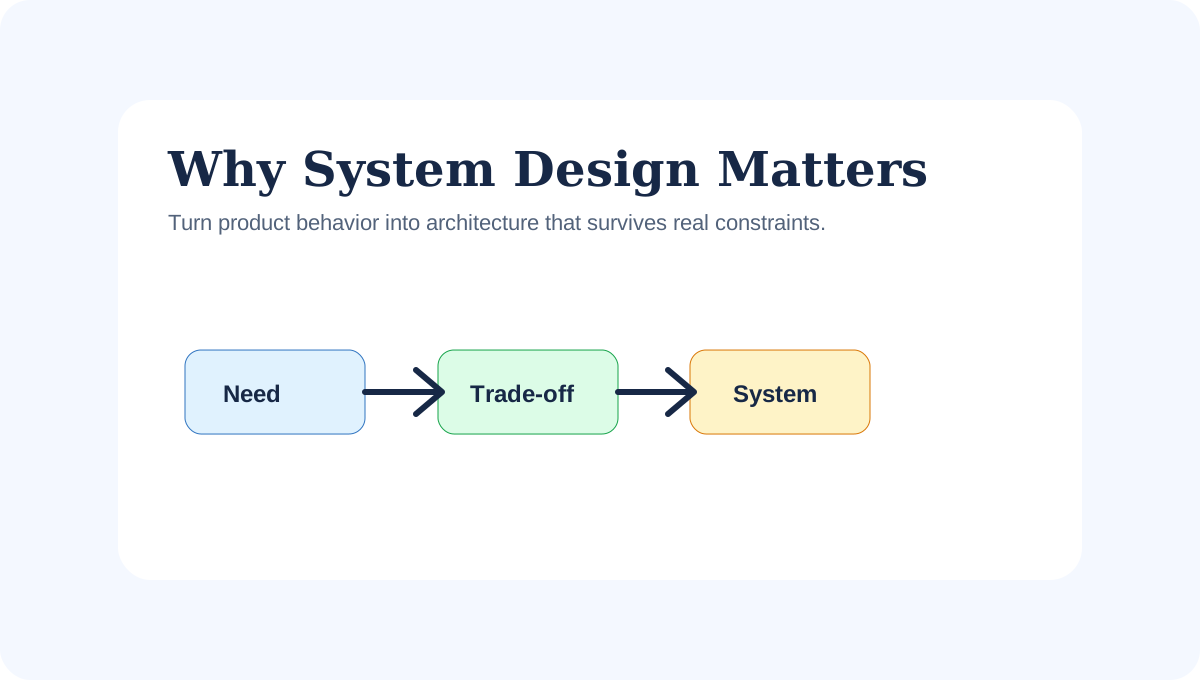
Why System Design Matters in Real Engineering
Understand system design as production decision-making across requirements, scale, reliability, cost, and operability.
What you will be able to do
System design is the discipline of turning product goals into a system that works under real constraints: traffic, data growth, latency, reliability, cost, team ownership, and failure.
What System Design Really Measures
A weak system design answer starts with a memorized architecture diagram. A strong answer starts with the product behavior and constraints, then chooses architecture pieces only after the trade-offs are visible.
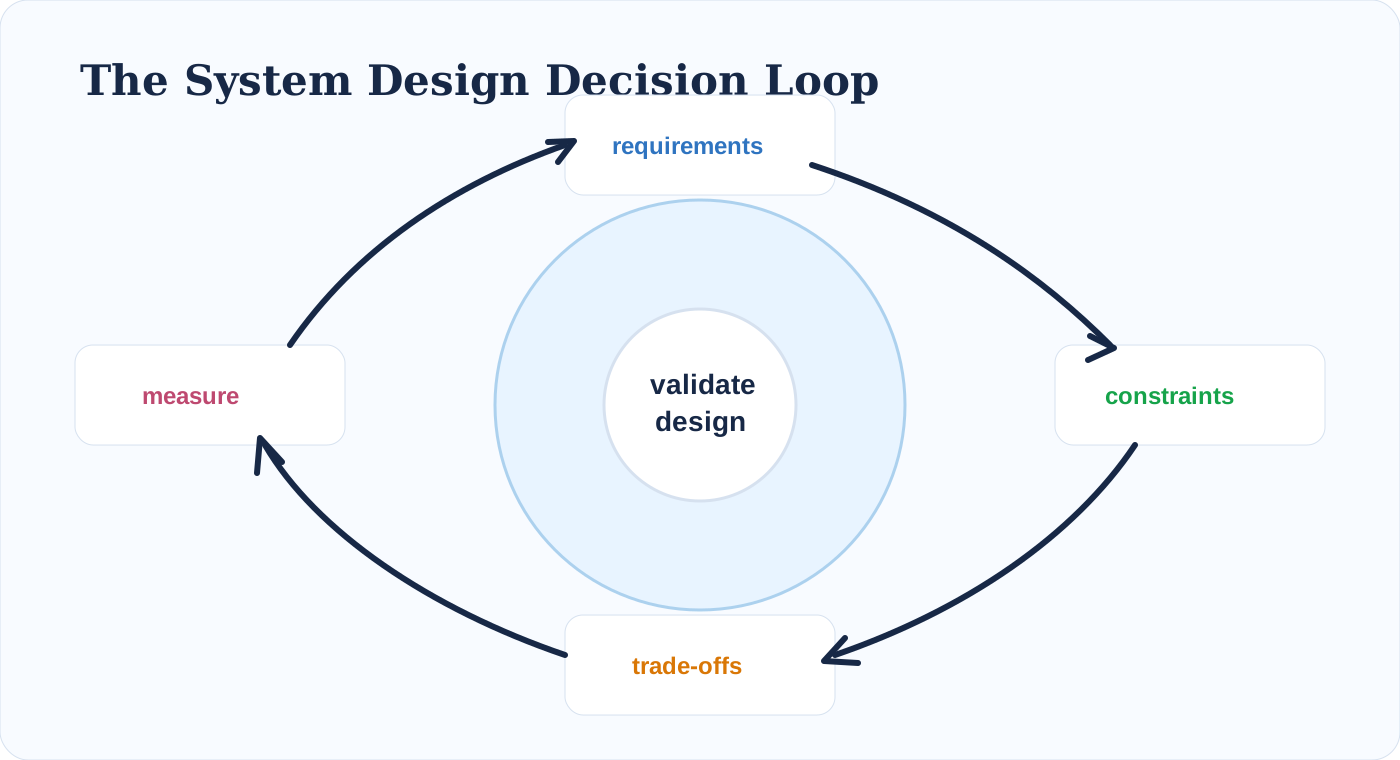
| Question | What it reveals | Strong answer behavior |
|---|---|---|
| Who uses it? | Product scope and actors | Defines clients, roles, and core flows. |
| How much traffic? | Capacity pressure | Estimates reads, writes, storage, and peaks. |
| What can fail? | Reliability risk | Adds graceful degradation, retries, and observability. |
| What must be consistent? | Correctness boundary | Chooses storage and consistency model deliberately. |
Scenario: Notification Platform
Imagine a product needs email, push, and in-app notifications. A diagram with API, queue, workers, and database is not enough. The design changes depending on whether users need real-time delivery, strict ordering, retries, quiet hours, provider failover, audit history, unsubscribe compliance, and campaign-scale fanout.
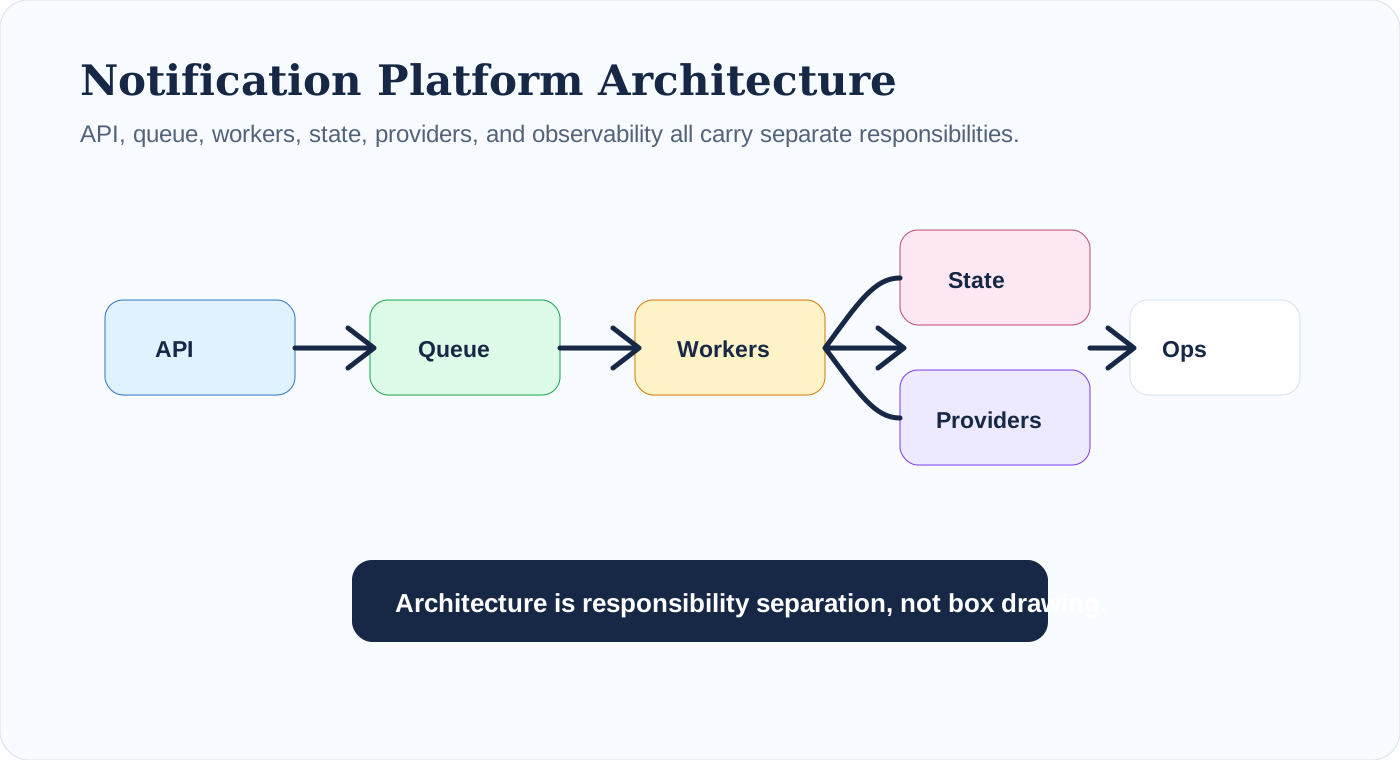
Design principle
Do not start with AWS, GCP, Azure, Kubernetes, or database names. Start with the product behavior and constraints. Then map the design to concrete services.
Vendor-Neutral Before Cloud-Specific
International-standard system design should be portable. You should be able to explain the architecture as queues, caches, databases, object storage, streams, load balancers, and observability first. After that, mapping to cloud services becomes a deployment choice instead of a memorization exercise.
| Architecture need | AWS | GCP | Azure |
|---|---|---|---|
| Async queue | SQS | Pub/Sub or Cloud Tasks | Service Bus queues |
| Pub/sub fanout | SNS/EventBridge | Pub/Sub | Event Grid or Service Bus topics |
| Cache | ElastiCache | Memorystore | Azure Cache for Redis |
| Object storage | S3 | Cloud Storage | Blob Storage |
| Observability | CloudWatch/X-Ray | Cloud Monitoring/Cloud Trace | Azure Monitor/Application Insights |
A Simple Way to Think
At the beginning, do not worry about advanced interview prompts. Think of a system as people using a product, requests entering the product, data being stored or changed, and background work happening after the request. System design is deciding how those pieces should cooperate.
| Plain question | System design version | Example |
|---|---|---|
| What does the user do? | Core user flow | A user taps Send notification. |
| What happens immediately? | Synchronous path | The API validates and accepts the request. |
| What can happen later? | Asynchronous path | Workers deliver email and push messages. |
| What must be remembered? | Stored state | Preferences, delivery status, retry history. |
| How do we know it works? | Observability | Metrics show accepted, delivered, failed, and retried messages. |
What You Should Not Worry About Yet
You do not need to know Kubernetes, Kafka, DynamoDB, Spanner, Service Bus, sharding, or CAP theorem to understand this lesson. Those are implementation choices we will introduce only after the need for them is clear.
- Do not memorize product diagrams yet.
- Do not try to choose the perfect cloud service yet.
- Do not optimize for millions of users before understanding one correct user flow.
- Do not treat every failure as equally important.
- Do not assume system design is only for senior engineers.
How Real Products Will Appear in This Course
Later modules will design URL shorteners, feeds, chat, notifications, search autocomplete, analytics pipelines, logging platforms, recommendation systems, rate limiters, file storage, video streaming, and location systems. Lesson 1 only introduces the thinking pattern you will reuse in all of them.
| Product | First thing to ask | Why |
|---|---|---|
| Chat | Does the message need to appear instantly? | Latency and ordering shape the design. |
| News feed | Who should see which posts? | Ranking and fanout shape the read/write paths. |
| File storage | How large are files and how often are they read? | Object storage, metadata, and CDN choices depend on access pattern. |
| Rate limiter | What abuse are we preventing? | The rule changes the data structure and storage design. |
Early Misconceptions
- A bigger diagram is not automatically a better design.
- Cloud service names do not explain why the design works.
- A system can be simple and still production-grade if the constraints are simple.
- The same product can have different designs depending on traffic, consistency, cost, and team size.
- The right first answer is often a question, not a box on a diagram.
First Practice
Practice task
Pick one product you use every day. Write five sentences: who uses it, what action they perform, what data changes, what could fail, and what the user would notice if it is slow.
Starter Vocabulary
| Term | Beginner meaning |
|---|---|
| Client | The app, browser, device, or service sending a request. |
| API | The contract clients use to ask the system to do something. |
| Database | The place durable product data is stored. |
| Queue | A waiting line for work that can happen after the request. |
| Cache | A faster copy of data used to reduce repeated work. |
| Metric | A number that helps engineers see system behavior. |
Before You Continue
- You should be able to explain why system design starts with product behavior.
- You should understand that cloud services are mappings, not the starting point.
- You should recognize that one product can have multiple valid designs.
- You should be ready to learn requirements and constraints next.